
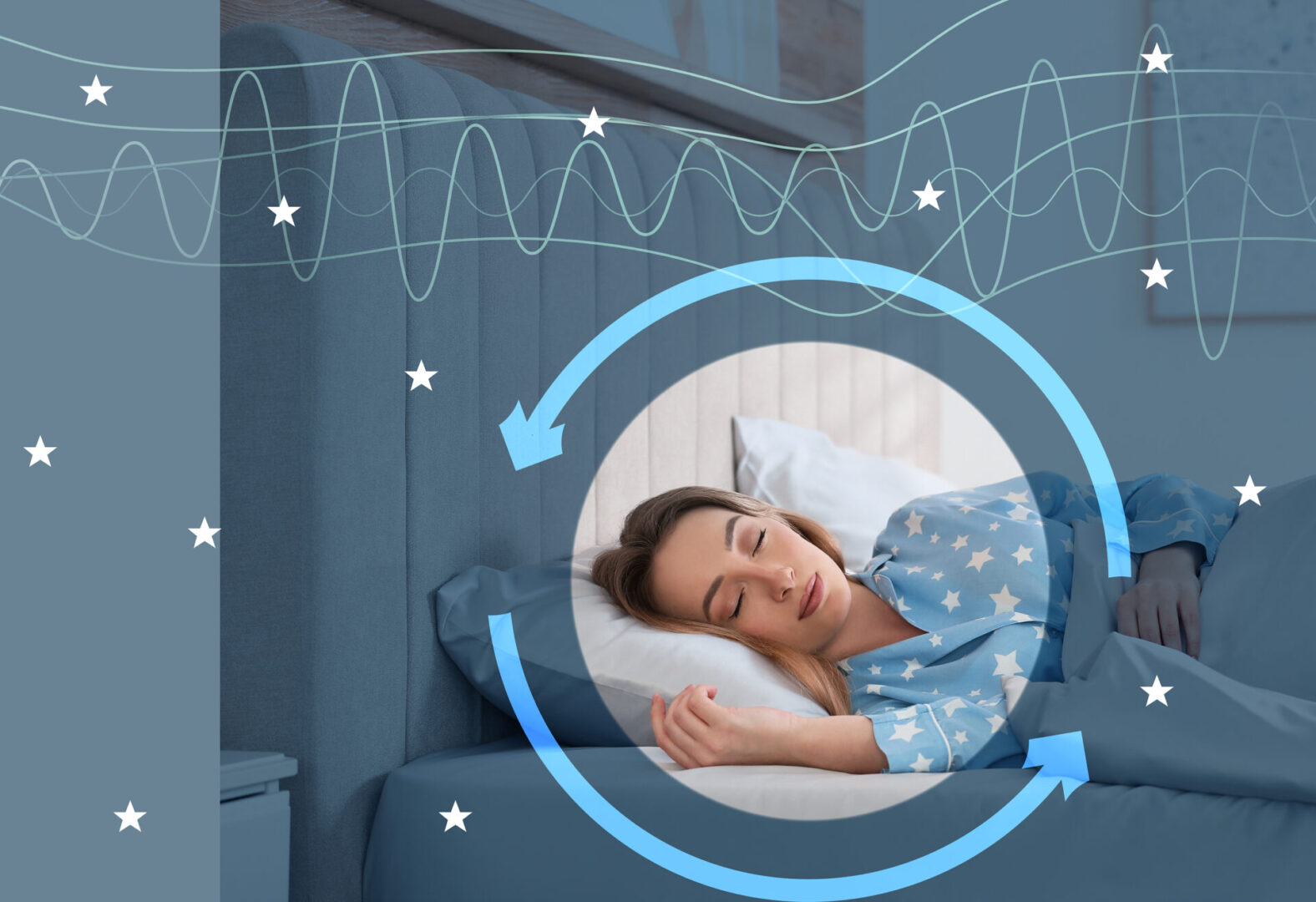
Sleep Architecture: Why 8 Hours Isn’t Always Restorative
You know that feeling when the alarm goes off, and you immediately think, There’s no way it’s morning already?
You check the clock.
Seven and a half hours. Maybe even eight.
So why do you still feel exhausted?
If you’re sleeping “enough” but waking up tired, the issue may not be how long you’re sleeping. It may be how well your body is moving through the stages of sleep. That structure is called sleep architecture, and it plays a bigger role in how you feel than most people realize.
You’ve probably heard of deep sleep and REM sleep before. Most people have. What we don’t always think about is whether we’re actually getting enough of those restorative stages, or whether something is quietly interrupting them.
Sleep isn’t just time passing in the dark. It’s a rhythm. Your brain cycles through light sleep, deeper sleep, and REM in a very specific pattern throughout the night. When that rhythm is steady, you wake up clearer and more energized. When it’s disrupted, eight hours can feel like four.
Let’s look at what’s actually happening while you sleep and why it matters so much.
What’s Actually Happening While You Sleep
Once you fall asleep, your brain doesn’t just power down. It shifts.
You move through repeating 90-minute cycles that include:
- Light sleep
- Deeper sleep
- Deep sleep
- REM sleep
And each one matters.
Deep sleep is when your body does most of its physical repair. Muscles recover. Immune processes are active. Growth hormone is released.
REM sleep is different. That’s when your brain processes information and regulates emotions. REM sleep is when most dreaming occurs, and interestingly, your brain is almost as active during REM as it is when you’re awake. This stage is believed to play a role in organizing memories and processing emotions. That’s why your dreams sometimes include pieces of your day: a conversation, a stressor, or even something small you barely noticed. Your brain may be integrating recent experiences with older memories, which is why dreams can feel both familiar and completely unexpected at the same time.
You don’t just enter these stages once and stay there. You cycle in and out of them all night long.
Here’s the part that surprises people:
The first half of the night contains more deep sleep.
The second half contains longer REM cycles.
So if you go to bed too late…
Or wake up repeatedly toward morning…
Or your sleep is fragmented…
You may be cutting into the most restorative parts without even realizing it.
That’s why two people can both say, “I slept eight hours,” and feel completely different the next day.
Why Sleep Doesn’t Always Refresh You
If you regularly wake up tired after sleeping, here are some common reasons.
Light exposure at night
Melatonin, often called the sleep hormone, is released in response to darkness. Even small amounts of light from a phone, alarm clock, fan, or television can interfere with that signal.
Stress and racing thoughts
You may fall asleep physically tired but mentally alert. Elevated stress hormones can reduce time spent in deep sleep.
Blood sugar fluctuations
Some people wake during the early morning hours due to subtle blood sugar changes during the night.
Alcohol before bed
A glass of red wine may make you feel sleepy initially, but it can fragment REM sleep later in the night.
Inconsistent sleep timing
Your circadian rhythm thrives on consistency. Going to bed at different times can disrupt the natural pattern of deep and REM sleep.
None of these necessarily prevent sleep. But they can prevent restorative sleep.
Sleep Quality vs. Sleep Quantity
This is where many people get stuck.
Sleep quantity is how long you’re in bed.
Sleep quality is how well your brain and body move through complete, restorative sleep cycles.
Those two things are not the same.
You can technically sleep eight hours and still miss what actually restores you. Why? Because quality sleep depends on:
- Spending enough time in deep sleep
- Completing full REM cycles
- Moving smoothly between stages
- Minimizing nighttime awakenings
- Maintaining a steady circadian rhythm
Think of it this way.
If you drove your car for eight hours but kept stopping every few miles, you wouldn’t get very far. The engine never runs long enough to do its job efficiently. Sleep works the same way. Fragmented sleep interrupts the repair and reset processes that happen in deeper stages.
Deep sleep is especially important for physical recovery. During this stage, growth hormone is released, tissues repair, and immune activity is supported. If stress, light exposure, or late bedtimes shorten deep sleep, you may wake up feeling physically heavy.
REM sleep, on the other hand, supports cognitive clarity and emotional balance. If REM is reduced or repeatedly interrupted, you may feel mentally foggy or emotionally reactive the next day.
So when someone says, “I slept eight hours, but I’m still tired,” the real question isn’t how long they slept. It’s whether they completed enough high-quality cycles.
The clock measures time.
Sleep architecture measures restoration.
And restoration is what you actually feel the next morning.
Supporting Healthy Sleep Architecture
If you want to improve how you feel in the morning, start with the basics.
- Keep your bedroom completely dark.
- Turn off screens at least one hour before bed. The blue light from screens suppresses melatonin production by mimicking sunlight.
- Go to sleep and wake up at similar times daily. Consider a sunrise alarm clock, like Hatch, to restore your circadian rhythm and fine-tune your bedtime and morning routine.
- Keep the room slightly cool.
- Avoid heavy meals and alcohol close to bedtime.
Simple changes can significantly improve sleep rhythm.
Additional nutritional support may also help support healthy sleep pathways.
A Closer Look at Sleep Formula
Sleep Formula is designed to support more than just falling asleep. It’s formulated to help support the full sleep cycle, easing you into rest, helping you stay asleep, and supporting the kind of sleep that feels restorative in the morning.
It contains 60 capsules per bottle and does not contain dairy, egg, nuts, GMOs, gluten, or soy.
Here’s what’s inside:
Melatonin
Melatonin helps regulate the sleep-wake cycle. Darkness signals its release from the pineal gland, supporting a smooth transition into sleep. When melatonin levels align with your natural circadian rhythm, it becomes easier not only to fall asleep but to maintain steady sleep cycles through the night.
L-Tryptophan
You’ve probably heard people say turkey makes you sleepy, especially around Thanksgiving. That’s because turkey contains l-tryptophan, an essential amino acid involved in serotonin production. Serotonin supports mood balance and is later converted into melatonin. L-tryptophan supports that pathway connecting calmness, emotional balance, and sleep.
Chamomile Extract
If you’ve ever had a cup of “sleepy time” tea before bed, or remember your grandmother handing you warm chamomile tea when you couldn’t settle down, you’ve experienced chamomile’s traditional calming use. Chamomile contains apigenin, a compound known for its mild relaxing properties and long history of supporting restful sleep.
Valerian Root Extract
Valerian root has been used historically to support sleep and stress balance. It supports restful sleep without the next-day grogginess often associated with stronger sleep aids.
Inositol
Inositol may help quiet nighttime mental chatter and support stress balance, making it easier to stay asleep once you drift off.
Together, these ingredients support multiple aspects of sleep architecture — not just sedation, but rhythm, depth, and continuity.
And for many people, that difference is noticeable.
One reviewer shared:
“Before using it, I took 5 mg of melatonin and would sleep through the night maybe once a month. Now, taking Sleep Formula, I sleep through the night almost every single night. I didn’t even know it was possible.” — M.K.
Another wrote:
“It has just the right amount of melatonin, valerian root, chamomile that I love. I wake up rested and not groggy.” — Lucia M.
And D.M. shared something many people can relate to:
“Even if I get less than 7 hours of sleep, my sleep score is still high. I feel it too. I wake up feeling refreshed, which was super rare prior to Sleep Formula.”
That’s the goal, not just more hours, but better sleep cycles. The kind that help you stay asleep and wake up feeling steady instead of sluggish.
The Role of Magnesium
Magnesium plays an important role in nervous system balance and muscle relaxation. It helps the body transition from alertness into a calmer state before sleep.
Magnesium glycinate is often preferred when the goal is relaxation and deeper sleep. The glycine attached to this form is known for its calming properties and gentle digestion.
Magnesium threonate may be helpful when nighttime mental activity is the primary concern. This form is commonly used for cognitive support.
Magnesium citrate is well absorbed and often used for digestive support, but it is not typically the first choice when sleep is the focus.
Choosing the right form matters. When you match the form to your goal, magnesium becomes a targeted tool.
Final Thoughts
Eight hours is a guideline. It is not a guarantee.
Restorative sleep depends on healthy sleep cycles, adequate deep and REM stages, a steady circadian rhythm, and a calm nervous system. When sleep architecture improves, mornings feel different: clearer, more focused, and more manageable.
If you are tired after sleeping, it may be time to look beyond the number of hours and focus on the quality of your sleep.
You do not have to figure this out on your own. Our certified nutritionists can help you identify what may be disrupting your sleep, guide you toward practical lifestyle changes, and help you determine whether Sleep Formula or the right form of magnesium fits your specific needs.
Call our team at 281-646-1659 and let’s create a plan that supports deeper sleep and more refreshing mornings. Sometimes one small adjustment can make a meaningful difference.
Better sleep is not about chasing more hours. It is about supporting the structure that allows your body to truly rest.
These statements have not been evaluated by the Food and Drug Administration. These products are not intended to diagnose, treat, cure, or prevent any disease.
