

Quercetin for Allergies? Meet the Flavonoid Behind the Buzz
Fall brings cooler air, colorful leaves, and, for many people, a new surge of sneezing. Ragweed pollen often lingers until the first frost, while damp leaf piles release mold spores. As a result, many people look for natural ways to stay comfortable during allergy season. One nutrient that comes up often in that search is quercetin. Below, we explain what quercetin is, how it interacts with histamine, and why people exploring quercetin for allergies often pair it with bromelain.
What Is Quercetin?
Quercetin is a plant pigment in a group of compounds called flavonoids. It gives color to many fruits and vegetables, including red onions, apples, berries, and kale. In fact, quercetin is one of the most abundant flavonoids in the human diet. Like other flavonoids, it acts as an antioxidant, helping neutralize unstable molecules called free radicals. Interest in quercetin for allergies, however, centers on a different action: its relationship with histamine.
Histamine and Seasonal Allergies
To understand quercetin, it helps to understand histamine first. Mast cells are immune cells found in the skin, nose, lungs, and digestive tract. Inside each one, histamine sits in tiny storage packets called granules. When a mast cell detects pollen or another trigger, it releases these packets all at once. The burst works much like a squid releasing ink when it senses danger. Histamine then binds to receptors in nearby tissue. As a result, blood vessels widen, mucus production increases, and nerve endings send itch signals. This chain of events explains why seasonal discomfort often shows up as sneezing, a runny nose, and itchy eyes.
How Quercetin Facilitates a Balanced Histamine Response
Online articles often describe quercetin as a “natural antihistamine.” That label, however, oversimplifies how it works. Rather than inhibiting histamine receptors, quercetin appears to act earlier in the process. Specifically, quercetin may help stabilize mast cells. In other words, stable mast cells release fewer of these packets when they encounter a trigger. Additionally, its antioxidant activity may help support a balanced immune response in the airways. This action at the source explains why quercetin has become a popular nutrient during allergy season.
Why Bromelain Pairs Well With Quercetin
Bromelain is a group of protein-digesting enzymes found in the stem and fruit of the pineapple plant. Traditional herbal practice has long used bromelain to support a balanced immune response. It may also help support healthy inflammatory signaling and normal mucus balance in the airways. Furthermore, the body absorbs quercetin poorly on its own, so thoughtful formulation matters. For this reason, many formulas combine the two nutrients so that each can play a complementary role.
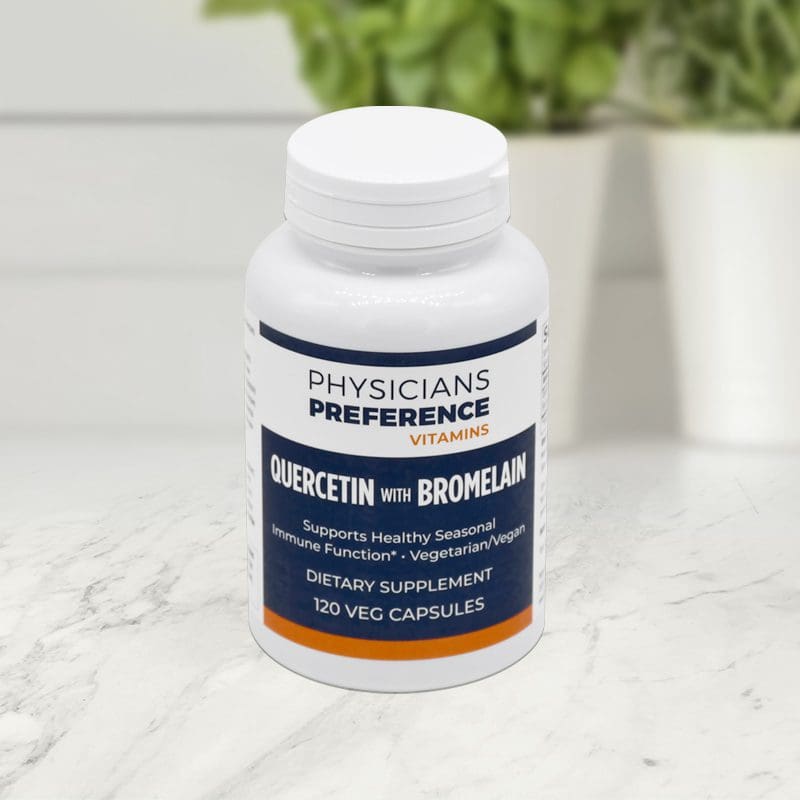
Physicians Preference Vitamins Quercetin w/Bromelain combines both nutrients in one capsule. The suggested use is two capsules, 20 minutes before meals, twice daily. If you have a sensitive stomach, you may prefer to take it with food.
Food Sources of Quercetin
Diet is a valuable foundation for anyone interested in quercetin for allergies. The table below lists common foods that supply this flavonoid.
| Food | Notes |
| Capers | Among the richest known food sources |
| Red onions | The outer layers hold the highest concentration |
| Apples | Most of the quercetin sits in the peel |
| Kale and broccoli | Both also supply vitamin C |
| Berries | Cranberries, blueberries, and elderberries all contribute |
| Green and black tea | A common daily source |
Vitamin C also deserves a mention. People with adequate vitamin C intake tend to have lower blood histamine levels. Citrus fruits, bell peppers, and strawberries are excellent choices. Therefore, a colorful plate helps you get both nutrients at once.
Using Quercetin for Allergies Wisely
Quercetin w/Bromelain is for adults only. Because bromelain comes from pineapple, skip this product if you’re allergic to pineapple. Quercetin and bromelain can also interact with certain medications, including blood thinners and some antibiotics, so check with your physician first if you take prescriptions.
More Tips to Pair With Quercetin for Allergies
Daily habits that limit your exposure to pollen and mold can complement any supplement routine. Consider adding these steps:
- Check local pollen counts each morning and restrict outdoor time on high-count days.
- Keep windows closed at home and in the car, and use air conditioning instead.
- Shower, wash your hair, and change clothes after spending time outdoors.
- Rinse your nasal passages with a saline solution to wash away pollen, using only distilled, sterile, or boiled and cooled water.
- Wash bedding weekly in hot water to remove pollen and dust mites.
- Dry laundry indoors, since sheets on a clothesline can collect pollen.
- Replace HVAC filters regularly and consider a HEPA air purifier for the bedroom.
- Wipe down pets after walks because their fur can carry pollen indoors.
Final Thoughts
Quercetin is a common dietary flavonoid that may help stabilize mast cells and support a balanced histamine response. Paired with bromelain, quercetin for allergies offers a meaningful addition to a seasonal wellness plan. To learn more about this combination, visit our Quercetin With Bromelain product page. For personal guidance, call our certified nutritionists at 281-646-1659.
*These statements have not been evaluated by the Food and Drug Administration. These products are not intended to diagnose, treat, cure, or prevent any disease.
Recommended products
 $49.95 — available on subscription
 $49.95 — available on subscription
 $49.95 — available on subscription