How Does the Body Detox? Liver and Gut Detox Explained
How does the body detox? Excellent question! We often hear about the importance of detoxing. Social media promotes cleanses. Stores sell powders and teas. However, very few sources explain how detox actually works inside the body.
The real story starts with how your body is built to protect and cleanse itself.
Your body doesn’t often need a dramatic reset. Instead, it already has built-in detox organs working around the clock. The liver and the gut form the core of this system. When they function properly, toxins are processed and eliminated efficiently. When they slow down, symptoms such as fatigue, bloating, brain fog, or sluggish digestion may appear.
To truly understand detox, we need to look at how these two organs work together to keep the body balanced and protected.
What Detox Really Means
Before understanding how the body detoxes, we need to define detoxification correctly.
Detoxification is the body’s built-in process of transforming and eliminating substances that could otherwise accumulate. These include:
- Environmental chemicals
- Metabolic waste products
- Excess hormones
- Alcohol
- Medications
- Bacterial byproducts from digestion
Detox is not a one-time event. It is a continuous biological function.
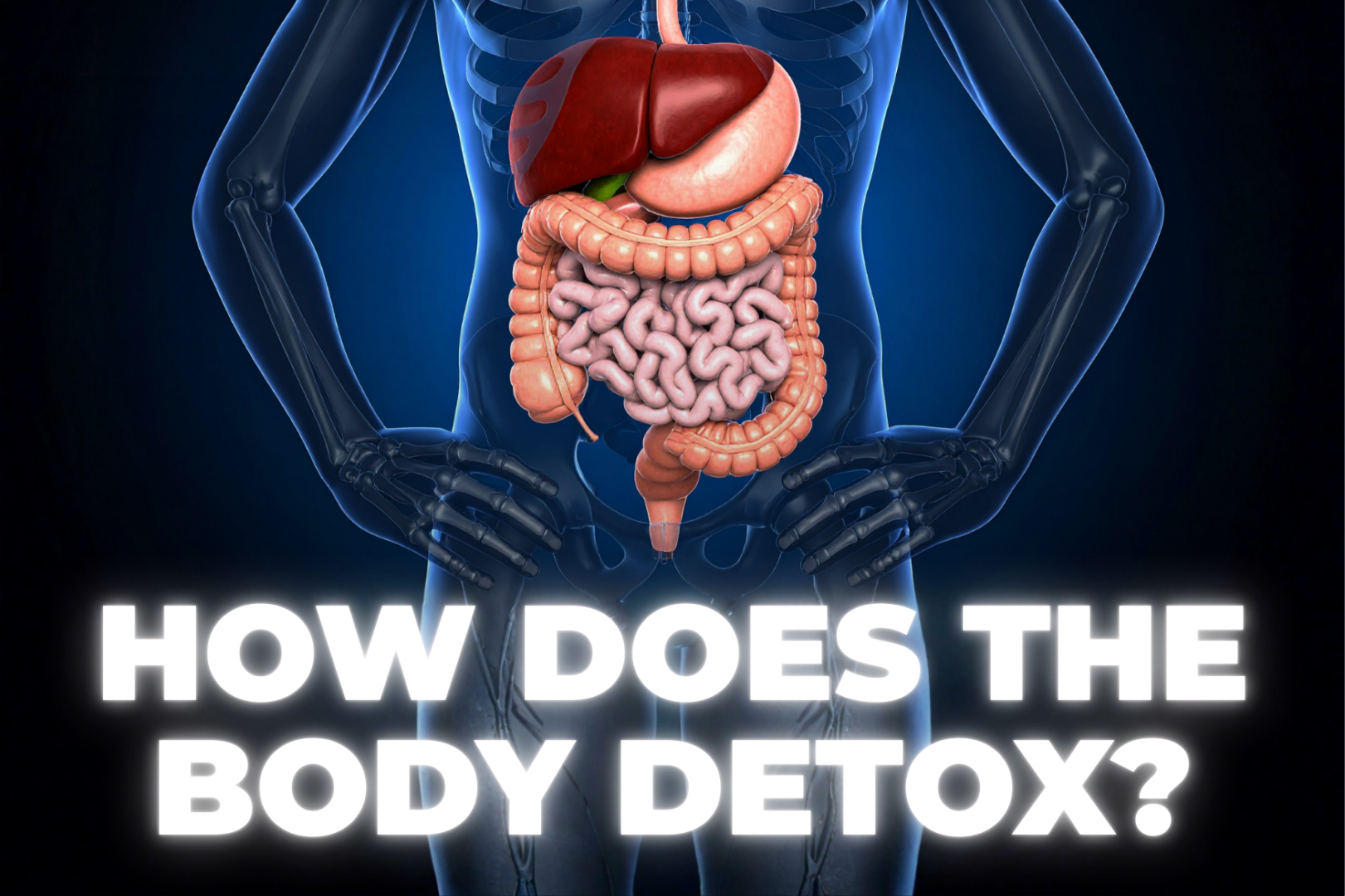
The process of detoxing always points back to two major detox organs: the liver and the gut.
How Does the Body Detox? A Closer Look at the Process
When people ask, how does the body detox, they are really asking what physically happens inside the liver and gut. The process is structured and highly organized.
Here is what actually occurs.
Step 1: The Liver Identifies Substances That Need Processing
Everything you ingest, inhale, absorb through your skin, or produce internally eventually passes through the liver. Blood from the digestive tract flows directly to it. Because of this, the liver acts as a filtration and processing center.
When the liver detects substances that should not circulate freely, it begins a two-phase transformation process.
Step 2: Phase I – Chemical Transformation
This is where the phrase “chemical transformation” becomes important.
Many toxins are fat-soluble, which means they dissolve in fat rather than water. Fat-soluble compounds can easily enter cells and may remain stored in tissues if not processed properly. The body cannot eliminate them efficiently in this form.
During Phase I detox, specialized liver enzymes modify these compounds. The liver changes the chemical structure of the toxin through oxidation and related reactions. This step prepares it for elimination.
In simple terms, the liver changes the structure of the molecule. It may add or expose a reactive group on the compound. This makes the toxin more chemically active and prepares it for the next step.
Think of Phase I as taking apart a complex object so it can be safely packaged for disposal.
However, after Phase I, the compound is often more reactive than before. That is why Phase II is critical.
Step 3: Phase II – Making Toxins Water-Soluble
In Phase II detoxification, the liver attaches specific molecules to the processed compound. This process, called conjugation, converts fat-soluble toxins into water-soluble forms.
Water-soluble compounds can now travel safely in bile or urine and be excreted.
This phase depends heavily on nutrients, including amino acids, sulfur compounds, B vitamins, and antioxidants like glutathione.
This is where targeted support becomes important.
The 14-Day Detox Kit was designed specifically to support this two-phase detoxification process. It provides:
- Nutrients to support Phase I and Phase II pathways
- High levels of antioxidants
- Herbs to promote healthy liver function
- A step-by-step guide to simplify the process
The included Detox Pak features Digestive Enzymes Complete and Amino-D-Tox™, which delivers glutathione and its precursors, along with targeted amino acids and sulfur-containing compounds to support Phase II liver detox pathways.
When Phase II is supported properly, compounds processed in Phase I can be eliminated efficiently.
Step 4: Bile Transports Toxins to the Gut
Once processed, toxins are secreted into bile. Bile carries them from the liver into the gallbladder and then into the small intestine.
At this point, liver detox is mostly complete. However, detox is not finished until elimination occurs.
Step 5: The Gut Eliminates the Waste
Now the gut takes over.
The intestines move waste products through the digestive tract. Fiber binds to bile and its contents. Regular bowel movements ensure these processed compounds leave the body.
If elimination slows, certain substances may be reabsorbed into circulation. Therefore, liver detox and gut detox must work together.
This coordinated sequence answers the question clearly: how does the body detox? It identifies, transforms, prepares, transports, and eliminates.
The Gut’s Role in Detox
Detox discussions often focus only on the liver. However, the gut determines whether detox is completed properly.
Three major factors influence gut detox.
Fiber
Fiber binds to bile and waste products in the intestines. Without adequate fiber, processed toxins may linger longer in the digestive tract.
A diet rich in whole-food fiber sources supports regular bowel movements and helps complete the final stage of detox. Consistent elimination is essential for preventing the reabsorption of compounds the liver has already processed.
Probiotics and Microbiome Balance
The gut contains trillions of microbes that influence bile metabolism, immune balance, and toxin processing.
A balanced microbiome supports proper elimination. However, microbial imbalances may interfere with detox by altering how bile acids and metabolic byproducts are handled.
Probiotic Blend Pro supplies a targeted blend of 3 prebiotics and 7 probiotics, extensively tested to promote optimal colonization with bacterial strains recognized for their bioactivity. Each capsule delivers 20 billion viable organisms, providing broad probiotic coverage to support microbiome balance.
By supporting beneficial bacteria, Probiotic Blend Pro helps maintain intestinal barrier integrity and supports efficient completion of detox pathways.
Digestive Efficiency
Incomplete digestion can increase metabolic burden.
Digestive Enzymes Complete supports the breakdown of proteins, fats, and carbohydrates. Efficient digestion reduces unnecessary strain on detox pathways and helps minimize bloating and digestive discomfort.
Additional Liver Support
While the Detox Kit supports two-phase detoxification directly, additional liver-support nutrients can play a role.
Liposomal Glutathione
Glutathione is one of the body’s most important antioxidants. It plays a central role in Phase II detoxification.
Liposomal Glutathione supports liver detoxification and antioxidant status. The liposomal form helps protect glutathione during digestion to enhance delivery.
Milk Thistle Extract
Milk Thistle has traditionally been used to support liver cell health and promote bile flow.
It may help protect liver cells from oxidative stress and support overall liver function.
Together, these tools support natural liver detox pathways rather than forcing detox artificially.
Detox Myths vs. Physiology
Now that we have discussed how the body detoxes, it becomes easier to distinguish between popular detox trends and biological reality.
Detoxification is not a dramatic event. It is not a sudden flush or overnight reset. Instead, it is a continuous metabolic process that depends on proper liver function, nutrient availability, and healthy elimination.
Because of this, extreme approaches may not support detox as effectively as people expect. Severe calorie restriction can reduce protein intake. Juice-only cleanses may lack the amino acids and micronutrients required for Phase II liver detox. Rapid “flushes” may overlook the importance of gut elimination entirely.
True detox support focuses on physiology:
- Supplying amino acids for Phase II conjugation
- Supporting antioxidant balance
- Providing fiber for bile binding and removal
- Maintaining microbiome balance for proper gut detox
When you understand how detox works in the body, the approach becomes steady and supportive rather than extreme.
Final Thoughts
So, how does the body detox?
It does so through precise, coordinated physiology.
Here is the process in simple terms:
- The liver identifies toxins that should not circulate freely.
- Phase I detox transforms those toxins by chemically modifying their structure.
- Phase II detox converts them into water-soluble compounds so they can be eliminated safely.
- Bile transports those compounds from the liver into the intestines.
- The gut completes elimination through proper digestion and regular bowel movements.
This system operates continuously. Detox is not a sudden event. It is an ongoing function that depends on adequate nutrients, digestive efficiency, antioxidant support, and healthy elimination.
When liver detox and gut detox pathways are supported properly, the body is able to process and eliminate waste efficiently. Supporting Phase I and Phase II liver pathways, maintaining antioxidant status, promoting healthy bile flow, and ensuring consistent elimination all contribute to optimal detox function.
Understanding how the body detoxes removes confusion and replaces it with clarity. Instead of focusing on extremes, the goal becomes strengthening the systems already built into the body.
When those systems are supported consistently, detox works exactly as it was designed to.
If you have any questions on supplements to support your body through the detoxing process, call our Certified Nutritionists at 281-646-1659. It would be our privilege to serve you.
